We live in a moment defined by environmental change. Yet the causes and consequences of these planetary transformations are profoundly uneven. Across race, class, gender, and other forms of difference, “environmental problems” manifest in radically unequal ways, disproportionately burdening some while benefiting others. In this course, we will grapple with this key tension in debates concerning what to do about present ecological crises, from proliferating toxicities and mass extinction to world hunger and a warming climate.
Certainly, these issues pose urgent, even existential dangers that demand intervention. Yet common refrains about how we should “save the environment” always come with baggage (e.g. who is “we” and whose environments, exactly, are at issue here). These claims have deep histories and hidden assumptions about causes and solutions, nature and humanity, justice and inequality, which we will uncover in this course and wrestle with as a group.
Our discussions will weave together three sets of perspectives: (1) dominant strands of environmental thought and what they are now saying about the inauguration of the so-called “Anthropocene,” (2) critiques highlighting various blind spots, complicities, and exclusions that have long bedeviled those mainstream traditions; and (3) our own standpoints as thinking, feeling, acting people struggling to find our feet in this surreal historical moment. Our dialogues will be exploratory rather than conclusive: the goal is not necessarily to find clear answers (because your instructor does not pretend to have them) but instead to take seriously Donna Haraway’s famous admonition to “stay with the trouble” as we attempt to envision “arts of living on a damaged planet” (Tsing 2017).
This task involves having to come to terms with our world’s compounding environmental ruinations and confronting how we are all, in different ways, implicated in their making. By linking each of the three elements of this course—mainstream environmentalism, critical perspectives, and ourselves—we will try to find ways of relating with the present that are cognizant of its dire urgencies but alert to the violent exclusions, pernicious inequities, and forms of magical thinking that so often afflict seemingly common-sense solutions. Our aim—collectively as a class and individually for yourselves—is to recover from this predicament something rigorous and honest in its reckoning yet something also capable of more than just lamentation or despair.
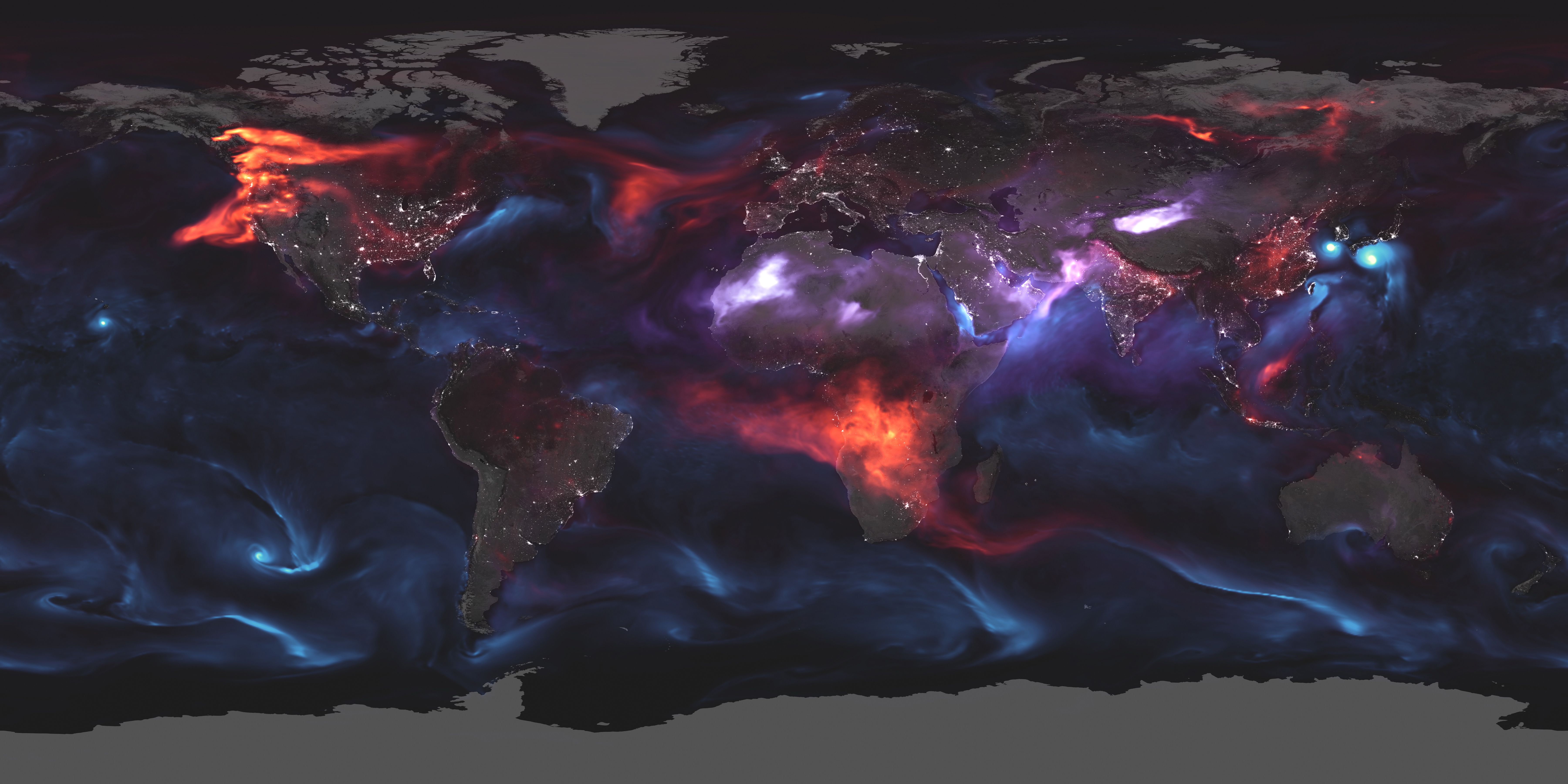
The image at the top of the page was made by NASA and depicts global aerosol patterns on August 23, 2018. Salient features of the image include several tropical cyclones, dust originating from deserts in Africa, smoke from agricultural burning (also in Africa and elsewhere), and a lot more smoke related to wildfires that had spread across many areas of western North America.
 DANIEL CHIU SUAREZ