Clashing perspectives over how to envision and enact “social change” have long riven the environmental movement, animating deep disagreement among activists. In this seminar, we will explore these debates by (1) analyzing various efforts aimed at “changing the world” and (2) troubleshooting their different methods, strategies, and underlying ideas about change. Through close analysis of these initiatives, we will examine how self-described practitioners of social change conceive of social change: what it is, what it looks like, how it happens, and how to do it.
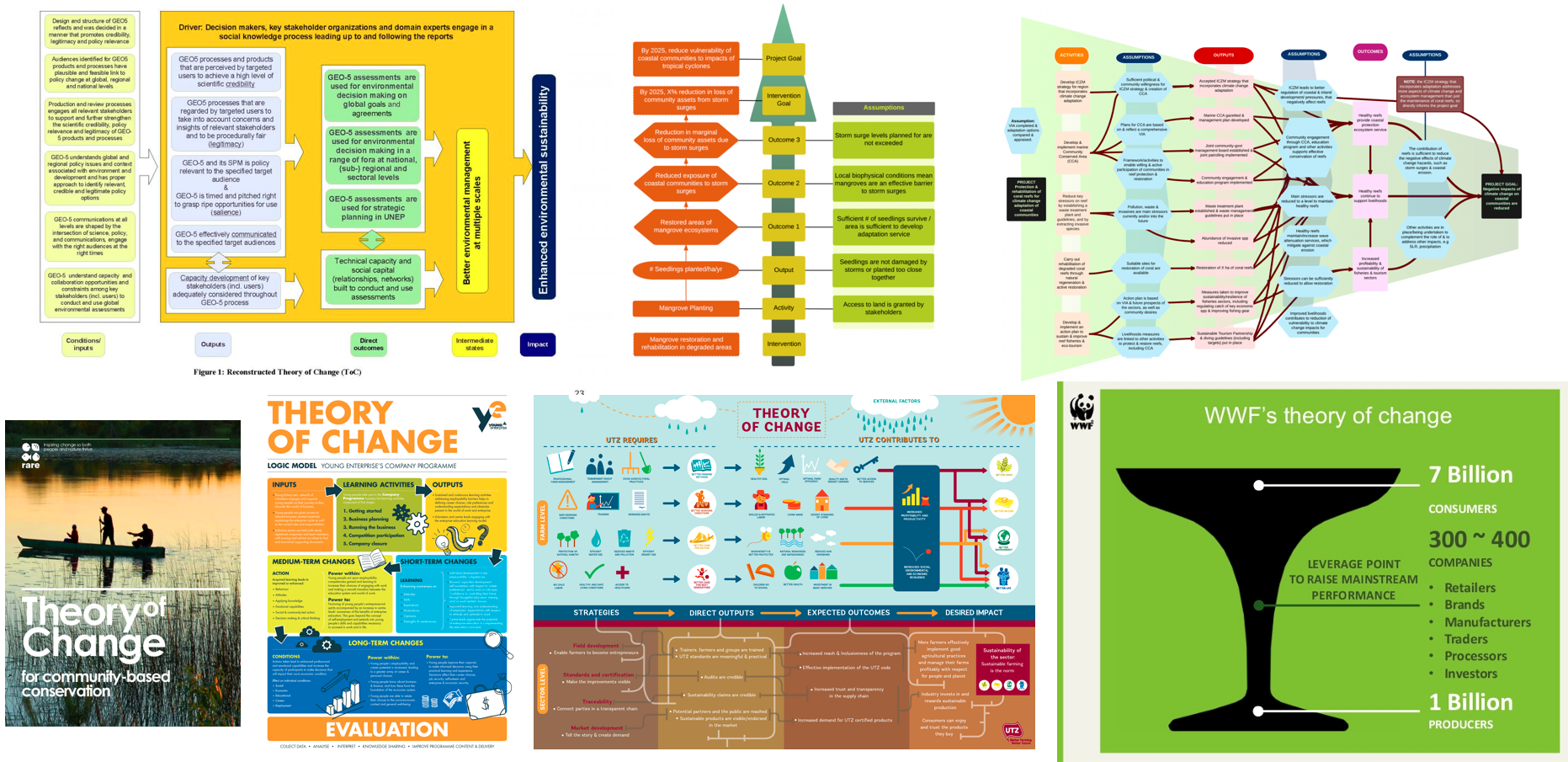
Our entry point into these debates will be through “theories of change.” Typically, a theory of change outlines key beliefs, assumptions, and hypotheses about how social change works. Through a mix of narrative and causal chain diagrams, theories of change depict how a given group will actually succeed at realizing its overarching objectives and go about securing the necessary conditions required to transform the status quo.
This course contends that theories of change are more than just helpful planning tools. They can also serve as windows into pivotal tensions at the heart of movement strategy and organizing, encompassing longstanding debates between reformers and radicals, insiders and outsiders, incrementalists and revolutionaries, realists and … well, other kinds of professed realists. By foregrounding the implicit logic underpinning pervasive claims about how social change is supposed to happen—essentially, requiring advocates to “show their work”—theories of change force aspiring change-makers to talk openly about, and thereby directly confront and reckon with, fundamental disagreements about the nature of power, history, political economy, social change itself, and how to properly relate to established patterns of social order.
By design, theories of change render these questions uniquely and unavoidably explicit. They thus offer revealing glimpses into how activists of varying stripes are wrestling with the political meaning of the current moment and what can, and should, be done about it. To say that opinions differ on such matters would be comic understatement. As such, we will engage a range of intellectual traditions, political orientations, and strategic outlooks regarding social change through in-class discussion, targeted course readings, and a series of structured assignments.
You don’t need me to remind you that these questions are more than just an interesting intellectual exercise. Much is at stake in our collective decisions about where, how, and with / against whom we choose to focus our efforts at this dire historical moment. And don’t let the word “theory” give you the wrong impression. This work is inherently messy and personally involving. A key goal of this class is to give you some exposure to this reality as you learn how practitioners of social change contend with the everyday dilemmas, entrenched power structures, dynamic relationships, idiosyncratic personalities, emotional rigors, and occasional windows of opportunity that all combine in different ways to define the terrain of today’s ongoing struggles to change and/or transform our world.

